


AI No‑Code Apps: Meaning, Benefits, Examples & How They Transform App Development
Published on:
4 February, 2025
By Webtonative
Author
AI No‑Code Apps: Meaning, Benefits, Examples & How They Transform App Development
In recent years, AI-powered no-code app platforms have changed the way building apps. Whether you are an individual or a business, you can create powerful apps without writing a single line of code. It is the easiest way to create an app compared to traditional development, as AI-No code apps combine intuitive visual builders with artificial intelligence.
Platforms such as WebToNative are the best AI no-code tools because traditional app development requires programming skills and larger budgets. In addition, AI no-code solutions make app creation more accessible to more people.
What are AI No-Code App Platforms?
AI No-code platforms are used to create applications that combine artificial intelligence with visual tools. These platforms help in managing technical tasks, like interface design, backend logic, and app deployment automatically. You can either describe how your app should behave in plain language or drag-and-drop features, and AI turns your instructions into functional features. A platform like WebToNative and Base44 lets you build web and mobile apps, focusing more on design and workflow than programming skills.
How AI No-Code Platforms Work?
To transform your instructions into working app components, AI no-code app builders rely on technologies like natural language processing (NLP), machine learning, and smart automation. They can design interfaces, configure APIs, generate database structures, and add AI-powered features, such as dashboards and chatbots. With WebToNative, you can simply convert visual sketches and written descriptions into a fully functional app that significantly reduces development time compared to traditional coding methods.
Benefits of AI No-Code Apps
App Development for Everyone Now, anyone can make robust applications with AI no-code app platforms, not just developers. Users from non-technical backgrounds, like entrepreneurs, product managers, or business owners, can create apps that solve real business problems, from workflow automation to customer engagement tools. This expands innovation among a wider range of teams beyond traditional engineers.
Speed Up App Launches You can make an app quickly, as AI no‑code app builders reduce manual coding and automate repetitive tasks. Instead of waiting for weeks, teams can launch apps or prototypes in hours or days.
Cost Effective You already know that going with traditional app development methods requires hiring developers, engineers, and designers, which can be expensive. No‑code AI app platforms reduce the need for technical roles, helping save time and money. Additionally, you can invest more in the company’s growth, innovation, and customer service.
Enhance Team Collaboration
AI no‑code tools allow different teams to work together on app development. Diverse teams from backgrounds, like sales, marketing, and operations, can directly contribute to overall app design, workflows, and overall progress. In addition, it improves collaboration and ensures everyone stays aligned.
Where AI no‑code Apps are Commonly Used
No‑code AI apps are often used to build practical and scalable solutions in various industries, from startups to enterprises, such as:
Internal Tools: You can create powerful dashboards, CRMs, reporting platforms, etc.
User Engagement: Smart chatbots interact with users seamlessly.
Task Automation: Automate workflows and connect business processes efficiently.
E-Commerce & Marketing: Offers product suggestions, targeted campaigns, personalized content, and more.
AI No‑Code App Platforms Challenges and Limitations
However, AI no‑code apps are powerful, but they come with certain limitations, such as:
- Reduce performance if you want to build highly customized or data-heavy applications.
- Sometimes, AI-generated logic may require adaptations for consistent results.
- Need additional configuration or technical expertise when integrating external systems.
Users often discuss these challenges when using AI no-code tools when comparing how platforms perform with complex as working in the way for simple prototypes.
Popular AI No‑Code Platforms
Base44: Build web and mobile apps using AI-powered conversational workflows without writing code.
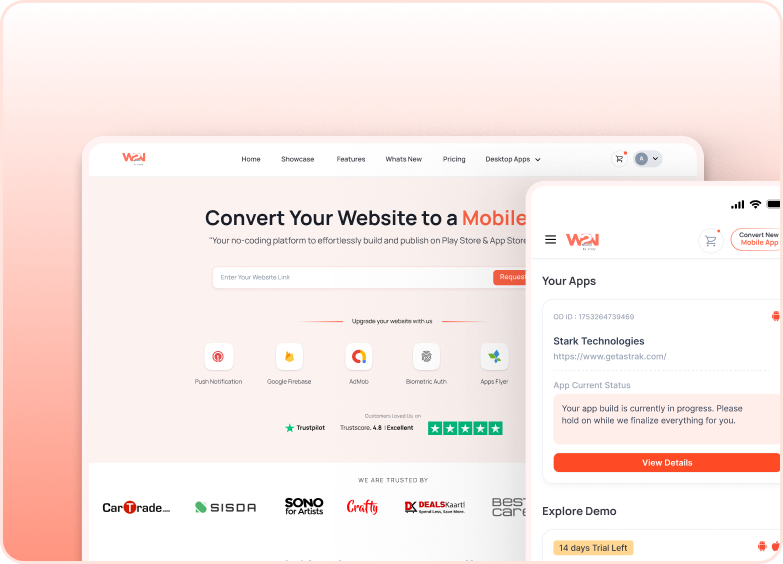
WebToNative: Turn your website into a working app seamlessly, including app store submission files.
OnSpace.AI: Generate cross-platform applications directly from visual designs.
AI No‑Code vs Traditional Development
Unlike traditional development methodologies, AI no‑code app builders work best for generating functional modules, interpreting high-level intent, and handling the logic automatically. This makes the app development process easy and quick for users from non-technical backgrounds.
If your main goal is to make an app from website, the no-code vs web-to-native comparison shows that WebToNative offers streamlined workflows, fast deployment, and app store-ready files.
Frequently Asked Questions
Q. What are no-code AI apps?
AI no‑code applications are AI-powered visual platforms that let anyone create web and mobile apps without requiring coding. Also, it enables users to automate backend logic, design UI, and deploy the app quickly.
Q. What are the main advantages of AI no-code apps? No‑code AI app platforms make application development accessible to everyone, no mattery either they are from technical or non-technical backgrounds. It significantly boost app development process, reduces cost, and improves collaborations. Additionally, they enable rapid prototyping and simplify workflows for businesses of all sizes.
Q. How to make an AI app without coding? No-code AI app builders are the best way to make an AI app without writing a single line of code, providing visual builders and automation. While the platform takes care of the technical setup and deployment.
Q. Are AI no-code app builders good for both platforms web and mobile apps? Yes, some platforms like WebToNative focus on transforming websites to native apps, while others like Base44 allow you to create both web and mobile apps through visual designs and AI-driven inputs.
Q. Who can use no-code AI?
It can be used by anyone, including technical and non-technical users, such as marketers, entrepreneurs, startups, small businesses, and more. They also help developers with prototyping and automation faster without code.
Conclusion
AI no-code platforms have made the process of making an app easier than ever. Now, it is accessible and cost-effective to both individuals and businesses. As blended visual builders with AI-powered automation, these tools have enabled even non-technical users to turn their ideas into fully functional applications.
Similar Blogs