


Lovable to Mobile App: What Are Your Options?
Published on:
10 September, 2026

By Chavi Chandani
Technical Content Writer
Table of contents
You already have an app built with Lovable. You described what you wanted in natural English, made a few changes, and suddenly you had a real web app ready in a few minutes. Maybe it's a dashboard, an art page, or a first version of your startup idea.
But then comes the obvious question: “How are you going to turn your Lovable app into a mobile app?”
You start thinking if you need to rebuild everything or if there is an easier way to go from Lovable to a mobile app.
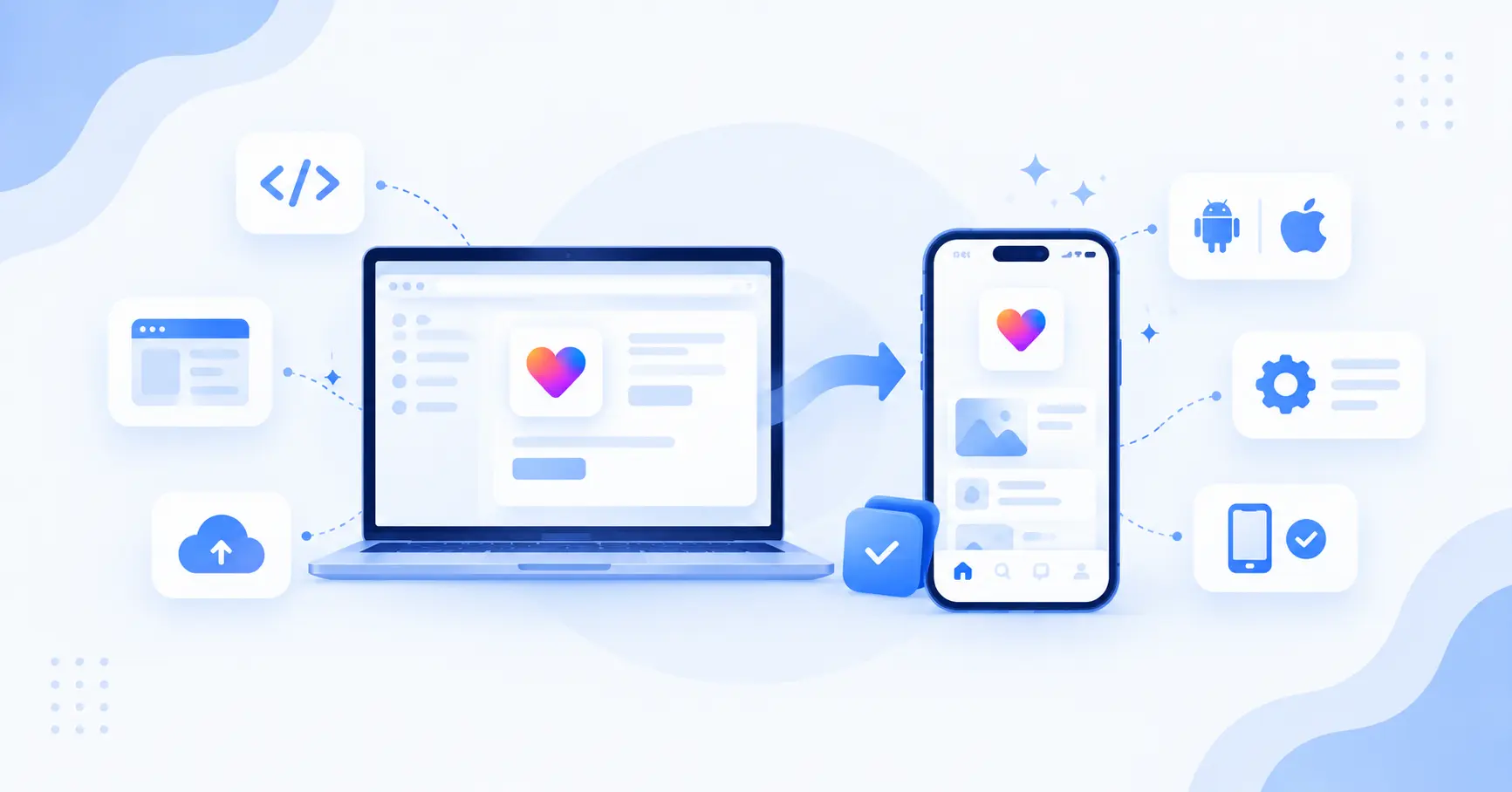
You have a few options. Let's look at what they are, what each one involves, and which option suits your app best.
Option 1: Turn Your Lovable App Into a PWA
This is one of the easiest methods to convert your Lovable web app.
Okay, what exactly is a Progressive Web App (PWA)?
It's a website that behaves similarly to a mobile app. Users can open your Lovable app in their respective browser, add it to their home screen, and access it like a normal app, without downloading it from the Apple App Store or Google Play Store.
Why choose a PWA?
- Add to home screen for quick access
- Offline support for various parts of the app
- Push notifications on supported platforms
- HTTPS security
- Responsive design that works across different screen sizes
And because a PWA is still based on web technologies, you don't have to create completely separate apps for iOS and Android.
But there’s a catch
A PWA can feel like an app, but it isn't the same as a downloadable app from the App Store or Google Play Store.Since users access it through a browser, your Lovable app won't have a regular app listing that people can find and download from these stores.
You may also have less access to some native mobile features than you would with a native app. Features such as installation and notifications can also work differently depending on the user's device and browser.
Option 2: Use a WebView Wrapper
If you want to publish your Lovable app to the App Store and Google Play without rebuilding it, then a WebView wrapper is also worth considering.
Your Lovable app and its contents will stay the same, it just wraps around a mobile app shell. Your existing app still does most of the work; the wrapper helps it run as an iOS or Android app. Services like Median and Capacitor can help you take an existing web app and turn it into a mobile app for iOS and Android.
What You Get With This Approach
- Keep your existing Lovable app instead of rebuilding it
- Publish on App stores
- Add mobile features such as push notifications, biometrics, camera, or QR scanning, depending on the service you use
- Keep your web app and mobile app connected to the same backend
- Make updates to your web app without maintaining two completely separate codebases
But There’s One Important Thing to Know
A basic wrapper is not enough for App Store approval. Apple says an app should provide useful features, content, and an app-like experience instead of just showing your website in an app.
So before publishing your Lovable app, make sure it works well on your mobile and consider adding features that actually make sense for mobile users, such as push notifications, biometric login, camera access, and other mobile-specific features.
Option 3: Rebuild as a Native Mobile App
If you want your Lovable app to function like a full native mobile app, you can rebuild its mobile version using a framework such as React Native or Flutter. This gives you more control over the app’s design, speed, and phone features.
You’re not exactly starting from zero. The good part is that you don't have to throw away everything you already built. You can keep your existing backend and data, but the mobile version will need to be built separately.
If your Lovable app uses Supabase, a service that stores your app’s data and manages things like your accounts and logins, you can keep using the same Supabase setup for your new mobile app.
What You Get
- Better control over the mobile app’s design and user experience
- Better access to native mobile features
- A more app-like experience than simply wrapping your website
- The ability to build for iOS and Android
- More flexibility if you plan to add complex mobile features later
Both React Native and Flutter can be used to build apps for iOS and Android.
For example, Flutter lets developers build apps for both iOS and Android using the same code.
The Catch
The biggest drawback is that you’ll need more time, money, and development work. Your lovable website can’t just be copied into React Native or Flutter. The mobile version has to be built separately and then tested on phones to make sure everything works properly.
This route is worth considering if your lovable app is already getting users and you want to take it further with better mobile performance, more control, or more features that need deeper access to the mobile. But if your main goal is to get your existing lovable app onto the Apple App Store and Google Play Store without rebuilding the whole mobile app, a PWA or WebView wrapper can be a much easier way.
Option 4: Turn Your Lovable App Into a Real App
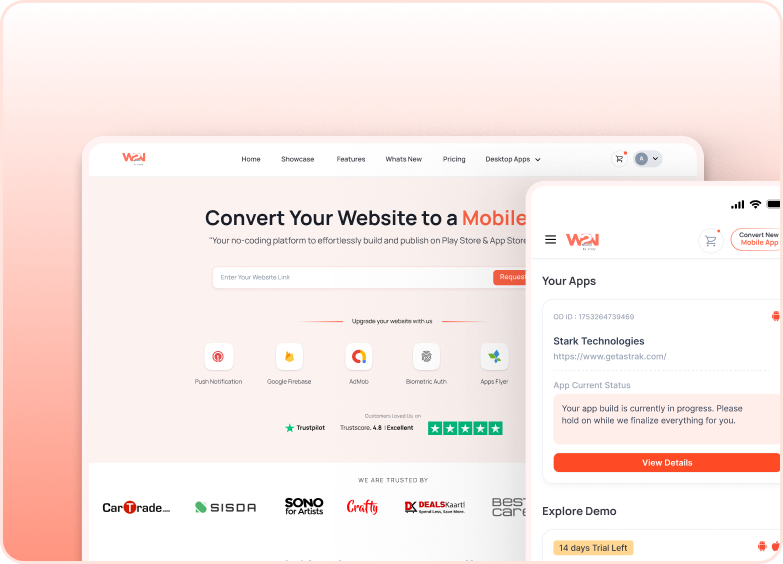
If you already have a working website in Lovable, you don't have to rebuild it again just to get it on users’ devices. This is where WebToNative can help. It takes your existing Lovable web app and turns it into an Android and iOS app without building the whole app version from scratch.
Just start with your Lovable app URL, choose your platform, and customize details such as your app name, icon, splash screen, and other app settings. WebToNative then creates the mobile app from your existing web app in minutes.
What Can You Add?
Unlike adding your website to a mobile’s home screen, a mobile app created with WebToNative can support features such as
- App Store and Google Play publishing
- Push notifications to reach users on their phones
- Biometric login such as Face ID or fingerprint
- Deep linking to open specific pages directly in the app
- Camera and other phone features
- A proper app icon and splash screen
- A mobile experience designed around your existing website
You can also keep your Lovable app as the main place where you make changes. This means you don't have to maintain a completely separate app from scratch every time your website changes.
The Catch
WebToNative still works with your existing web app, so the quality of the mobile app depends partly on how well your Lovable app works on smaller screens. Before publishing, make sure the pages are mobile-friendly, easy to navigate, and quick to load.
This can be a practical middle ground between a basic PWA and a full native rebuild for someone who has already built a Lovable app and wants to move from Lovable to mobile app without rebuilding everything.
| Options | What it does | App Store / Google Play | Effort | Best for |
|---|---|---|---|---|
| PWA | Makes your website work more like an app | Not like a regular app listing | Low | Anyone who wants a quick mobile experience |
| WebView Wrapper | Puts your existing web app inside a mobile app | Yes | Low-Medium | Those who want their existing app on the stores |
| Native Rebuild | Builds a separate mobile version using React Native or Flutter | Yes | High | Apps that need more control and advanced mobile features |
| WebToNative | Turns your existing web app into an iOS and Android app | Yes | Low | Lovable users who want to keep what they already built |
Frequently Asked Questions
Q1. Can I convert my Lovable app to a mobile app for free?
A. Turning your Lovable app into a PWA is free since it uses your existing web app. Wrapper tools and services like WebToNative usually have a free trial or a low starting cost, while a full native rebuild is the most expensive route since it needs a development team.
Q2. Does WebToNative need my Lovable app's source code?
A. No. You just need your Lovable app's public URL. WebToNative wraps your existing app into a mobile shell. You don't have to share or rebuild any code.
Q3. How long does it take to publish on App Store and Play Store?
A. With a wrapper tool like WebToNative, you can usually get your app ready in a matter of days. App Store and Play Store review times are separate and can take anywhere from a few hours to a few days depending on the platform. A native rebuild takes much longer since the app itself needs to be built first.
Q4. Do I need to maintain two separate apps if I use WebToNative?
A. No. Your Lovable app stays the single source of truth. Any changes you make to your web app reflect in the mobile app too, so you're not maintaining two different codebases.
Q5. Will my mobile app automatically update when I change my Lovable app?
A. Yes. Since the mobile app loads your live Lovable app, any changes you make to your web app show up in the mobile app too, without needing a new app store submission.
Conclusion
Going from Lovable to a mobile app doesn't mean you have to build everything again. If you only want your app to be easy to access from a mobile device, a PWA can be enough. If you want to publish your existing app on the App Store and Google Play, a WebView wrapper can be a simpler route. And if you need more control over performance and mobile features, you can build a separate native app.
But if you already have a working Lovable app and want to bring it to both iOS and Android while keeping what you've already built, WebToNative can make the process much simpler. You can use your existing app and add features such as push notifications, biometric login, deep linking, and other mobile features without maintaining a completely separate app from scratch.
So, before choosing an option, think about what your app needs, how much development work you're ready to take on, and how closely you want your mobile app to match your existing Lovable app.
Similar Blogs