


Top 10 Industries Using No-Code Mobile App Builders in 2026

Published on:
5 June, 2026

We have recently looked through insights from over 400K+ mobile apps built on WebToNative. And the number of industries actively adopting no-code app builders to develop an app was unexpected. Over 40 industries showed up in our data. A few were faster-moving than others, automating workflows, everyday operations, and reaching wider audiences in ways that were not possible a few years ago.
Think about how you manage and handle your business’s everyday tasks and projects today. You handle finances, track shipments, hold meetings, and communicate with team members – everything on a mobile app. Your customers expect the same from you.
But developing your own mobile app? Most business owners, developers, or entrepreneurs Google it once and look for $10000 as a minimum development in the beginning, with a few months of building. And thus refuse it and close the search.
In today’s technology-driven world, the no-code mobile app builders have changed this scenario. Businesses are switching from traditional app development to no-code app development. According to Gartner, by 2026, 75% of all new mobile apps will be built using no-code technology. No developer. No months of development time. No extensive budget.
The real question is not whether your industry uses a no-code mobile app builder. It is worth knowing how they are already using it and where you are missing.
So, continue reading. Let’s start breaking it down in depth.
What are No-Code Mobile App Builders?
No-Code Mobile App Builders allow building and developing a fully functional mobile app without writing lines of code. It uses drag-and-drop elements, visual editors, and pre-built components. You just have to place the elements or editors as per your requirement. The rest is handled by the code. It is focused on team members, individuals without any technical or programming knowledge.
Below is a quick look at how no-code mobile app development compares to traditional mobile app development.
| Feature | No-Code Mobile App Development | Traditional Mobile App Development |
|---|---|---|
| Cost | $0 - $500 / month | $10,000 - $150,000 + |
| Time to Launch | Few hours to 3 business days | 3 - 12 months |
| Technical or Coding Skills | Not Required | Skilled developers required |
| Maintenance | Platforms handle everything | Requires a team of professionals |
| Customization | Template-based | Fully custom-based |
| App Updates | Real-time and Immediate | Requires redeployment |
The price difference alone is responsible for why businesses are adopting no-code platforms. If you want a deeper pricing breakdown for both the app development approaches, you must read our blog on Low-code app development and traditional app development: What is the price difference?
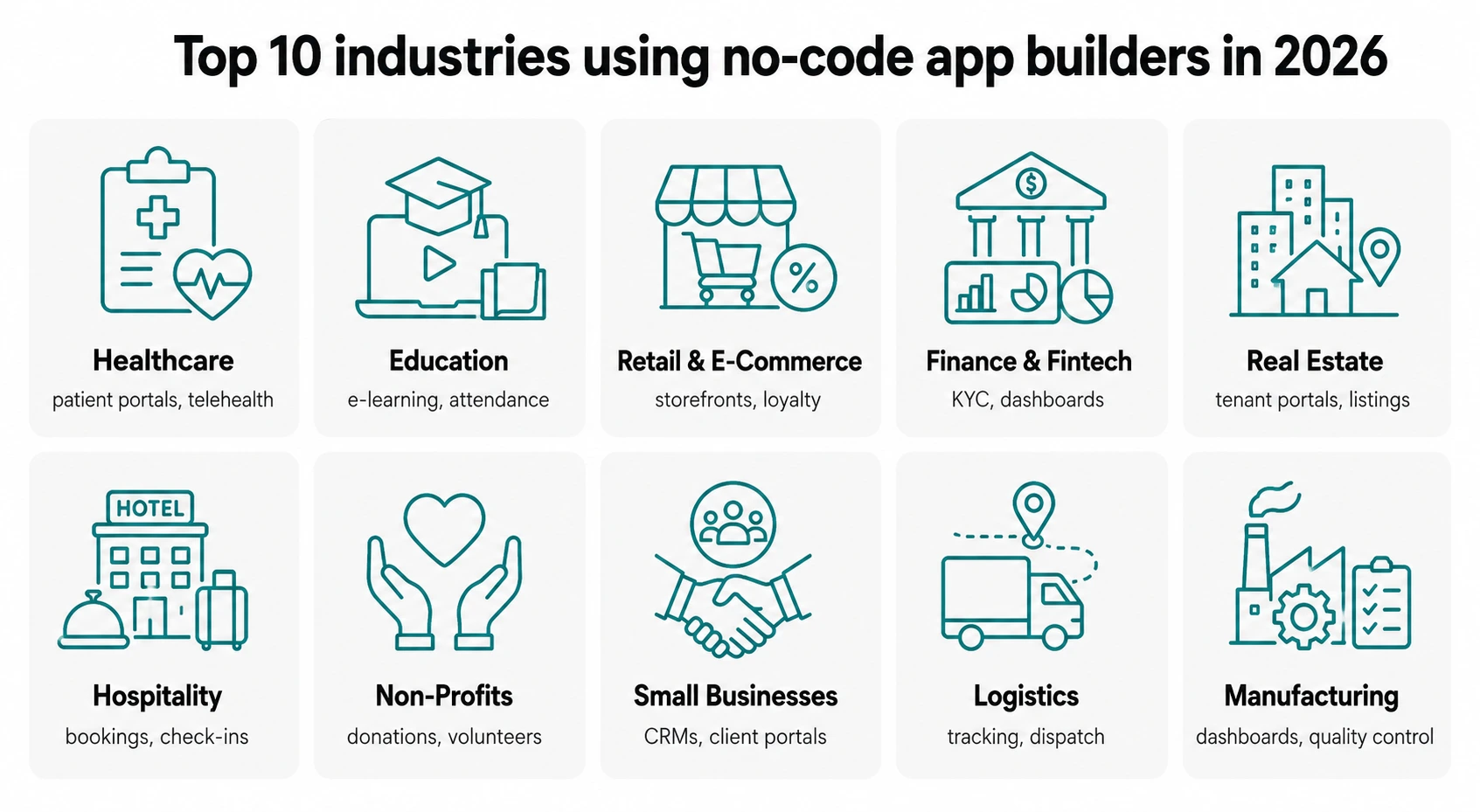
Top 10 Industries Benefiting from No-Code App Builders with Real Examples
1. Healthcare
Healthcare is one of the fastest-growing industries to adopt no-code app builders. Many clinics, individual practitioners, and hospitals face similar challenges every day, such as handling appointments, sending follow-ups & reminders, managing patient records, and conducting consultations. Manually handling all of these takes time and energy that could be used to provide patient care. With increasing compliance, no-code platforms help healthcare organizations improve workflow efficiency to make it easier to maintain security and privacy standards.
How No-Code Mobile App Builders Help in Healthcare:
-
Patient Portals Provide patients with secure access to their test reports, medical history, and prescriptions directly from their mobile devices.
-
HIPAA-Compliant Data Handling It helps healthcare providers to maintain and manage patients' data with security, privacy, and regularity requirements.
-
Appointment Scheduling Apps Allow people to schedule, reschedule, or cancel appointments easily from the mobile app to reduce missed appointments.
-
Digital Intake Forms Digital forms that save patient details directly into the records without errors and duplication save loads of time.
-
Telehealth Integrations Allow patients to connect with doctors through secure video consultations, online follow-ups, and chats. This helps healthcare be more accessible and convenient, irrespective of location and time.
Real Life Example
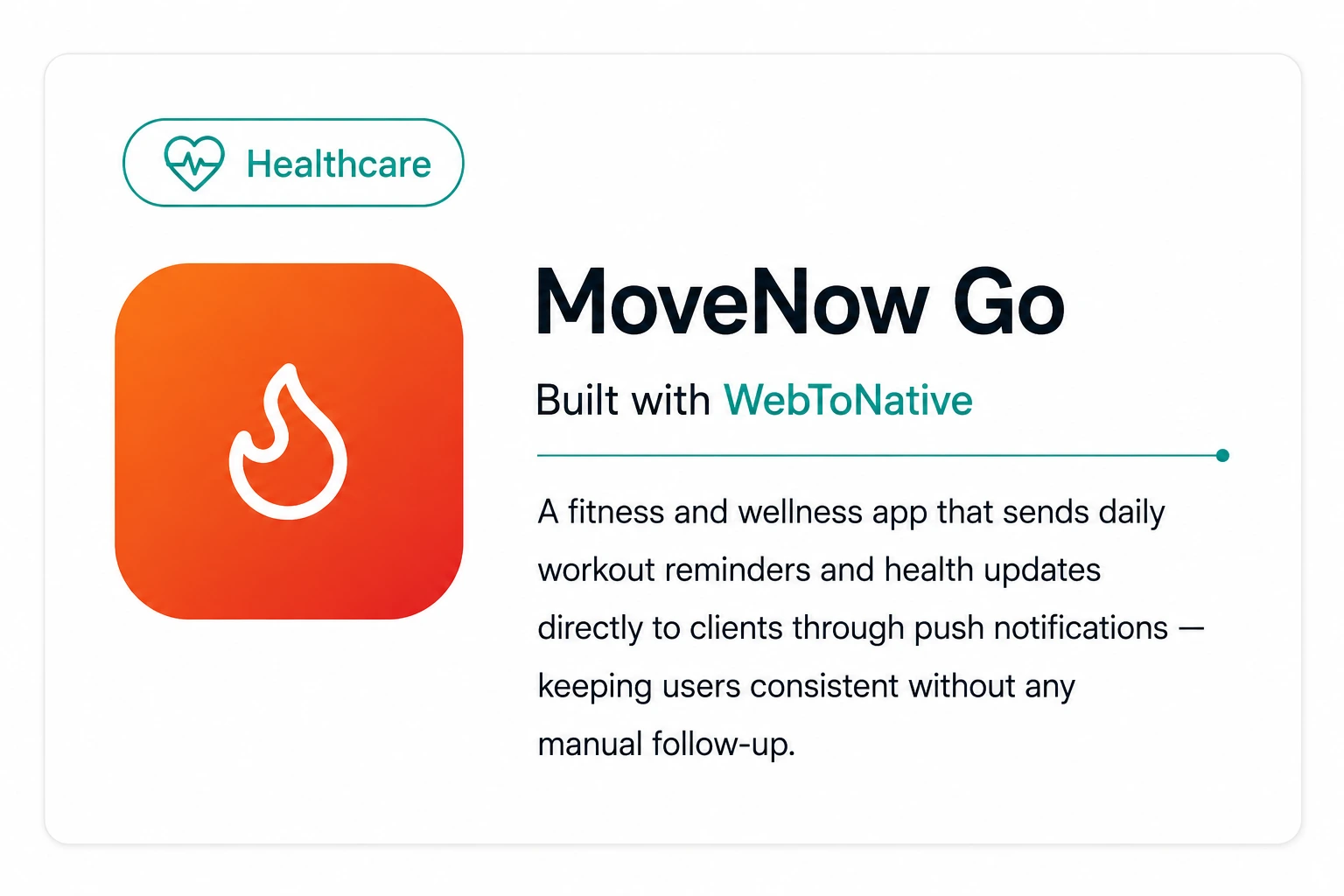
MoveNow Go, a fitness and wellness app, was built with WebToNative by converting their existing website into Android and iOS mobile apps. The mobile app sends everyday workout reminders and health updates to its clients through push notifications directly on their mobile devices. It helps in keeping users engaged and consistent with your app without any manual follow-ups. This results in a smoother client experience built without writing thousands of lines of code.
2. Education
Many coaching institutes, colleges, educational startups, and schools develop valuable learning content. But it fails to provide a smooth mobile app learning experience. Most students spend most of their time inside mobile apps while browsing content through websites. This led to missed updates and students moving to competitors that deliver similar content inside dedicated mobile apps. According to UserGuiding, estimates suggest that educational institutions are increasingly adopting no-code platforms for administrative processes. A few reports revealed adoption rates of around 15% for everyday operations.
How No-Code Mobile App Builders Help in Education:
-
E-Learning Platform It allows students to access quizzes, video lessons, downloadable study materials, and assignments inside the mobile app. This makes it easier for students to track their learning progress.
-
Parent Communication Tools The mobile app simplifies the process for schools and colleges to instantly share important information, updates, reminders, and announcements with parents.
-
Virtual Classroom Sessions Create virtual and hybrid learning sessions through live lectures and recorded sessions that work as a communication tool between teachers and students.
-
Automated Admin Tasks It helps reduce manual tasks by tracking progress, attendance, and reports automatically from the app.
-
Student Management Apps It helps schools, institutions, or colleges to organize their schedules & assignments and track students more efficiently.
3. Retail & E-Commerce
Mobile website browsers deliver slow loading times, improper payment flow, no order tracking, and no personalization. Business owners and retailers with a website lose sales each day to competitors with a fully functional mobile app. The key problem is that people reach the website with a few steps, but in an app, it's just a click, and inside the mobile app. According to UserGuiding, 25% of retail businesses have adopted no-code platforms for their customer-centric mobile apps.
How No-Code Mobile App Builders Help in Retail & E-Commerce:
-
Mobile Storefronts It allows customers to browse product catalogs, use search filters, view multiple categories, complete purchases, and use online payment options for a smooth and quick shopping experience.
-
Push Notifications This helps businesses to update and remind users about their orders, offers, rewards, sales, and leftover carts. It is an approach to encourage users to take an action inside the app.
-
Inventory Management Tools It helps store, track, and manage the information about stock levels, inventory, and raw materials to avoid inventory shortages and overstocking.
-
Loyalty & Reward programs These programs encourage users to repeat purchases by offering rewards, exclusive discounts, and loyalty points to their repeat customers.
-
Personalized Shopping Experience Tracking each customer’s shopping behavior helps deliver a personalized shopping experience to them. It includes recommending their choice-worthy products, exclusive offers on their cart items, and more.
Real Life Example
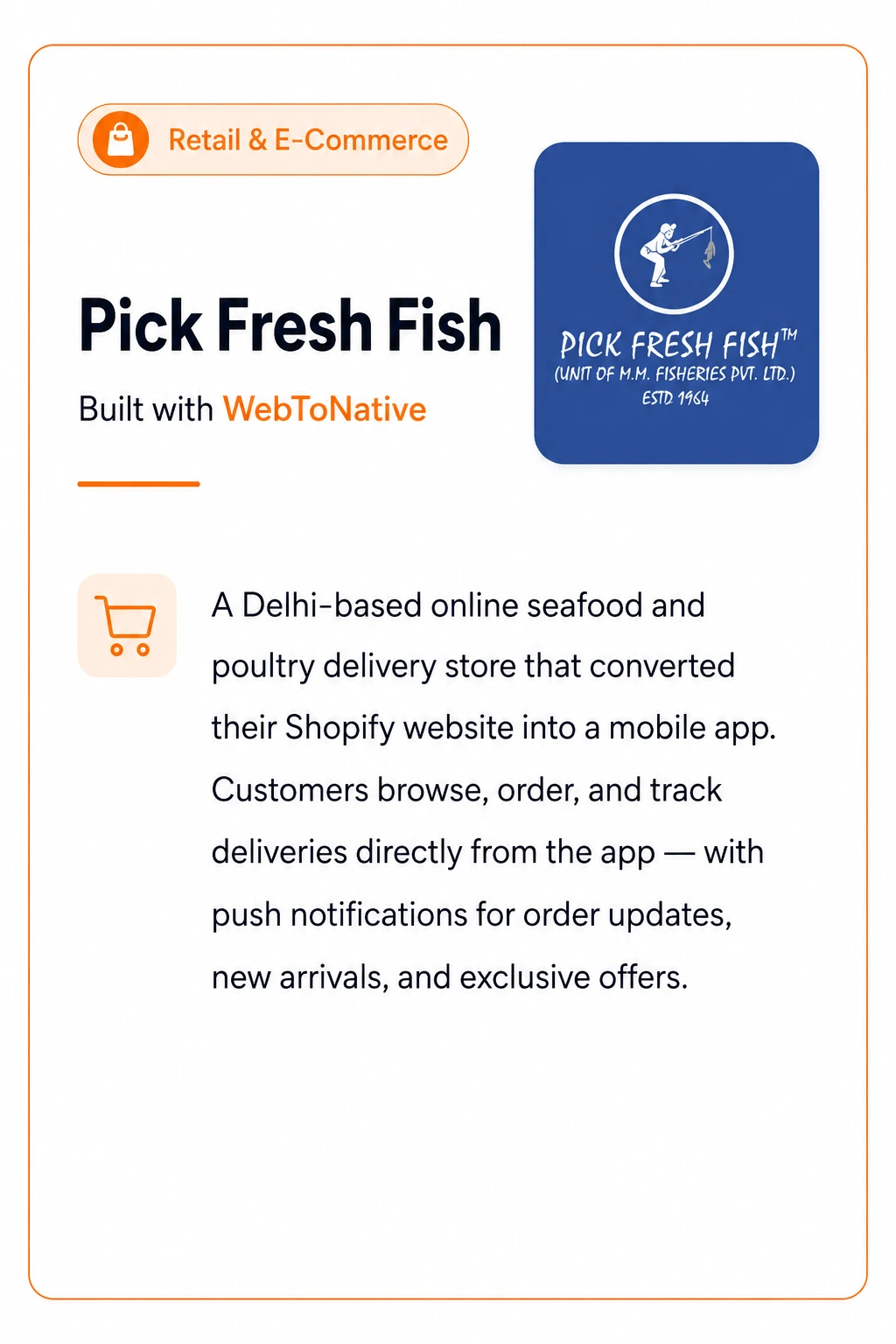
Pick Fresh Fish, an online seafood and poultry delivery store based in Delhi, converted their Shopify website into an Android app. Customers can order directly from their mobile app, turning one-time customers into repeat customers. It helps track orders, get exclusive discounts, and get updates, delivering a smooth app experience for users.
4. Finance & Fintech
Finance teams and individuals handle loan appointments manually, spend days onboarding clients, and verify KYC through emails. There are the most common everyday workflows in this industry, and each delay leads to a lost client. Codewave research indicates that the finance industry will adopt no-code platforms in 2026 due to the requirement for rapid internal process automation and compliance cloud integrations.
How No-Code Mobile App Builders Help in Finance & Fintech
-
Internal Dashboards It is used to have a comprehensive view of client data, performance, task progress, and operations by managers and teams.
-
Client Onboarding Apps These apps make it easier to gather KYC details, verify identities, and upload documents digitally, reducing manual effort and saving time with speedier approvals.
-
Automated Alerts Send timely reminders and alerts for EMIs, payment dues, account information, and transactional updates.
-
Tracking and Budgeting Tools These tools help retail banking customers to monitor their budgets and expenses to make effective financial decisions.
-
Loan and Credit Workflows Allowing people to submit application requests online and track approval status in real time.
Real Life Example
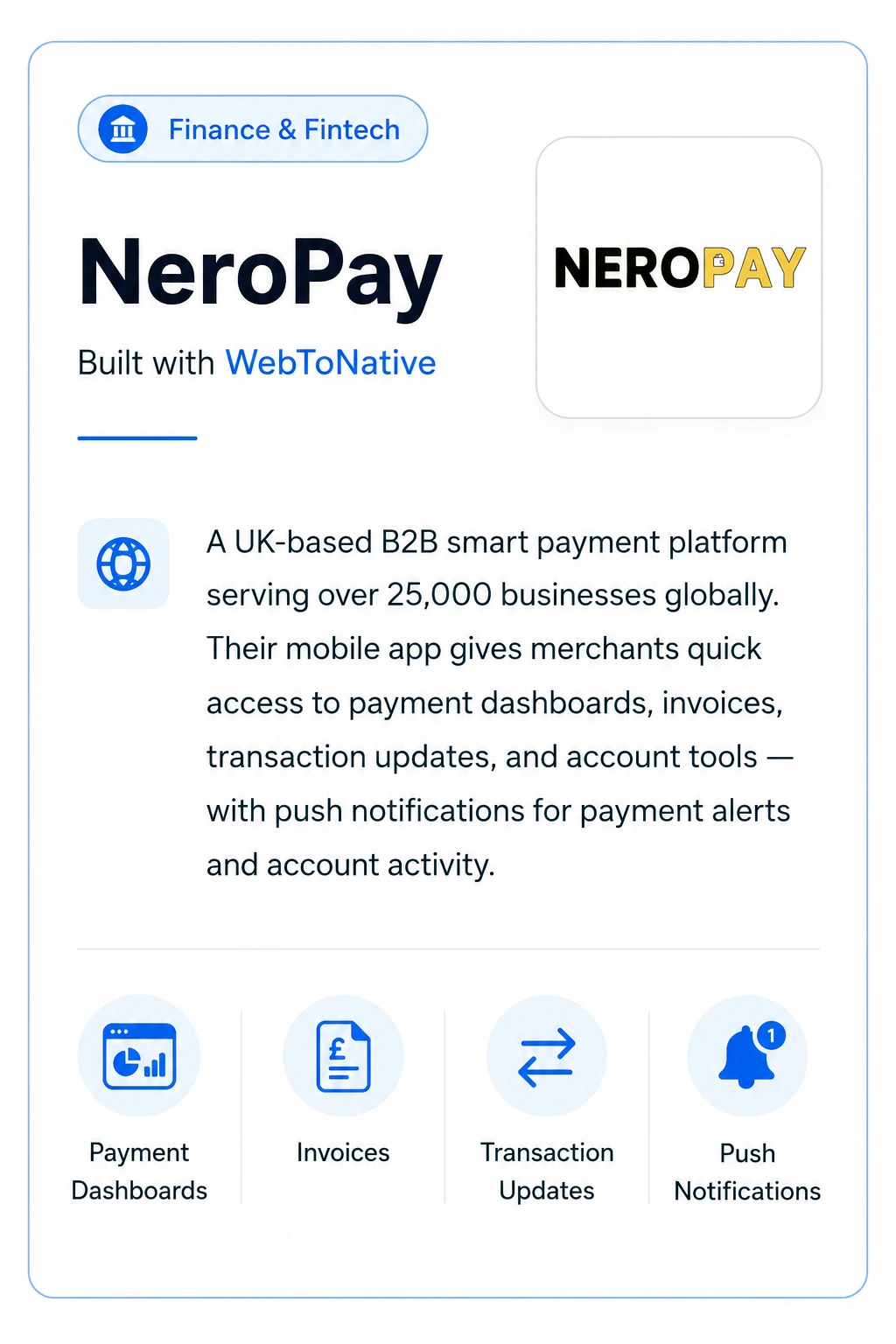
NeroPay is a business-to-business smart payment solutions platform based in the UK. They extended their platform experience through an Android and iOS app using WebToNative. The app offers merchants quick access to payment dashboards, accounts, transaction updates, and invoices, giving complete control of all activities and transactions.
5. Real Estate
Brokers, property managers, or owners mostly juggle around WhatsApp messages, spreadsheets, and phone calls. While agents manage leads, follow-ups, and listings using different tools. This gives rise to limitless confusion, missed opportunities, losing clients, and slow response times. Research shows that real estate is one of the leading industries using no-code app platforms to automate management tasks and develop secure portals for clients, sellers, and buyers.
How No-Code Mobile App Builders Help in Real Estate:
-
Tenant Portals It gives tenants a convenient and faster way to pay rent, track updates, submit maintenance requests, and renew leases without multiple communication channels.
-
Push Notifications It can be used to alert users about price drops, exclusive discounts, new property listings, and updates to keep them engaged.
-
Property Listing Apps It allows buyers and sellers to browse property listings with photos, pricing details, contact forms, and virtual tours for faster inquiries.
-
Permissions-based Access It helps provide customizable dashboards with different access levels for buyers, agents, sellers, and renters based on their roles and permissions.
-
Lead Management Tools It helps agents to track inquiries, automate follow-ups, and organize prospects so that no deal or opportunity is missed or left behind.
6. Hospitality (Hotels, Events, Boutiques)
Many boutique hotels, event-based companies, and resorts won't have their own mobile apps. This often lacks immediate response to guests, checkout support, and room service. This results in staff being flooded with phone calls, missed checkouts, slower services, and not offering a great guest experience. Adalo research shows that hospitality is one of the top industries to use no-code app builders to simplify workflow and manage customers efficiently.
How No-Code Mobile App Builders Help in Hospitality:
-
Digital Assistance Features It lets guests request room service, manage check-ins & check-outs, and receive local recommendations directly from their devices.
-
Post-Stay Feedback Platforms It automatically sends review requests, and gathering guests' feedback helps to provide a smooth future experience.
-
Booking and Reservation Systems It allows guests to check real-time availability, receive confirmations, and make bookings in real-time from their mobile devices, irrespective of their location.
-
Push Notifications Sending notifications keeps guests informed about booking information, exclusive offers, checkout reminders, and service updates.
-
Event Management Platforms It helps businesses to organize guests, bookings, event updates, and schedules more efficiently.
7. Non-Profits (Donations, Organizations, NGO)
Non-profits work with limited budgets where every dollar is counted. The donor's communication is handled through emails, newsletters, or WhatsApp groups that are often missed or left unseen. This slows down the operations, leading to unmanageable donations and organizations. UserGuiding research reveals that more than 90% of no-code users say these platforms helped their organization grow faster, yet manageably. No-code app builders also greatly benefit non-profits.
How No-code Mobile App Builders Help Non-Profits:
-
Campaign Tracking Tools It allows organizations to show real-time fund progress, keeping agents informed and motivated to contribute.
-
Donation Apps Easier for donors and supporters to contribute immediately from their mobile devices for a smoother experience. It includes showing tax receipts, donor information, and more.
-
Event Apps It helps manage funds, community programs, and campaigns by organizing schedules and updates.
-
Push Notifications It sends updates, alerts, and notifications to supporters and people about upcoming events, donation appeals, and reminders.
-
Volunteer Coordination It helps manage task assignments, hours tracking, check-ins, and schedules effectively in one place.
Real Life Example
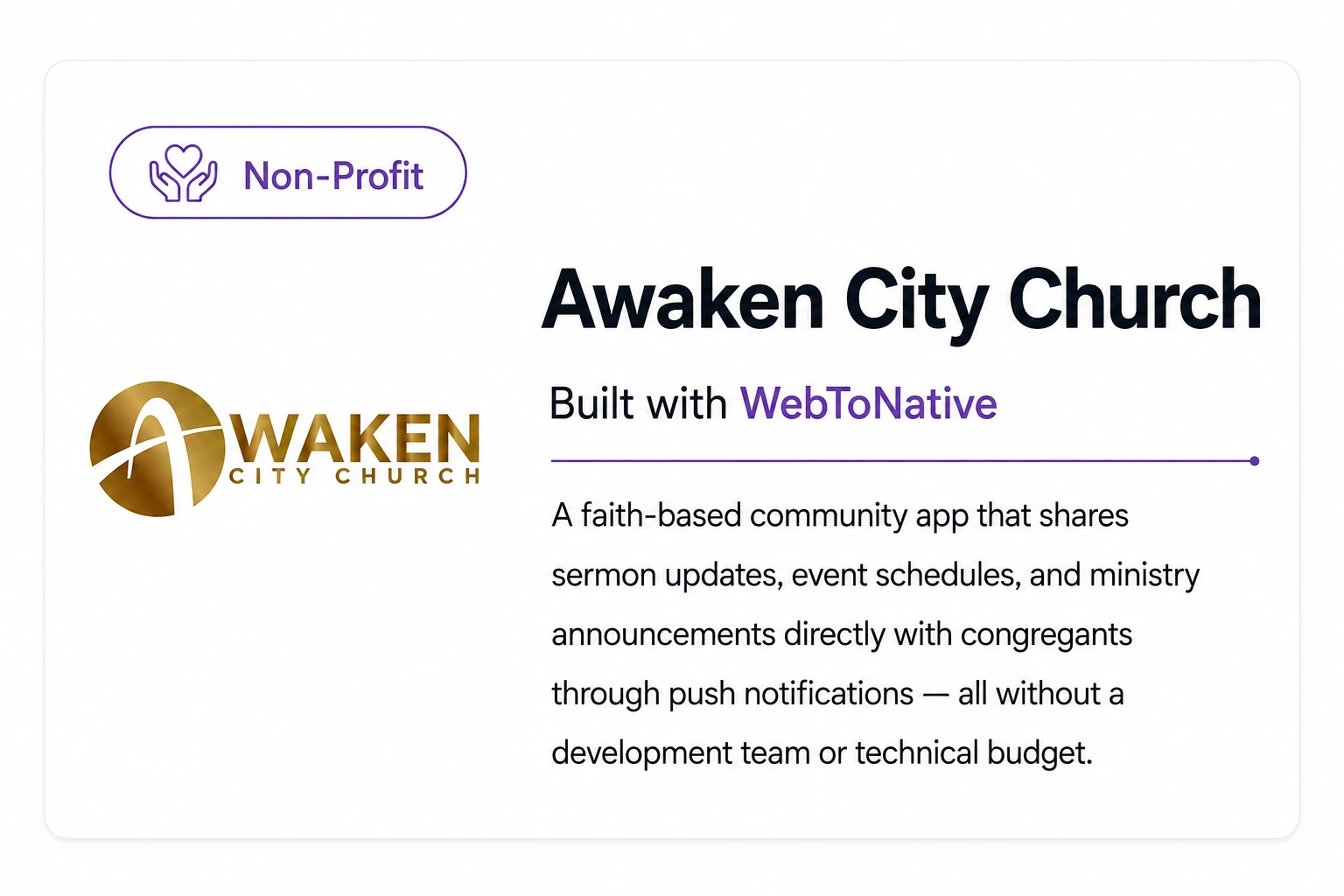
Awaken City Church is a faith-based community organization based in Gold Coast, Australia. They successfully turned their website into an iOS app through WebToNative. The app helps them share sermon updates, event schedule reminders, and ministry announcements directly. All information reaches the members without hiring developers and extensive budgets.
8. Freelancers and Small Businesses
Individuals and small businesses are limited compared to large enterprises. But this scenario has changed due to the no-code mobile app builders. Nowadays, businesses and freelancers develop their own mobile apps as effectively as large businesses. According to Gartner, a non-technical developer will exceed a professional developer by 4:1, making no-code tools the most practical choice for small businesses and individuals who want to move fast without depending on developers.
How No-Code Mobile App Builders Help Freelancers and Small Businesses:
-
Strong Visibility It helps small businesses and individuals to build strong visibility for their brand among people without overspending.
-
Custom CRMs It is designed to track, manage, and organize follow-ups, reminders, everyday operations, and customer history without buying expensive software.
-
Client Portals It offers clients a place to look for their project status, upload files, find improvements, and reviews for better work efficiency.
-
Bookings Apps It is useful in case you offer services like consultations or personal training that require early bookings.
-
Push Notifications Keep customers informed and updated with schedules, information, and exclusive offers on their mobile screens.
9. Logistics and Field Services
Many logistics and field servicers depend on manually calling to coordinate with drivers and dispatchers. It lacks real-time progress and delivery updates. This interrupted communication creates delays, confusion, and additional costs. Codewave reveals that logistics is one of the leading industries adopting no-code mobile app builders in 2026.
How No-Code Mobile Apps Help Logistics and Field Services:
-
Field Technician Apps It helps teams and businesses manage job assignments, share status updates, and complete service checklists in real-time.
-
Customer Tracking Portals It allows customers to view live delivery updates, order status, and estimated arrival times from their mobile devices directly.
-
Driver Apps It provides digital sheets, navigation assistance, delivery proof, and route updates to improve efficiency.
-
Automated Notifications Send delivery confirmations, service updates, feedback requests, and delay alerts to customers instantly, keeping them informed and up to date.
-
Dispatch Management Tools Provide operations managers with real-time insight into fleet activity, delivery status, and route efficiency.
10. Manufacturing and Operation
Various manufacturing and operation sites depend on paper checklists and handwritten records to manage everyday tasks. The data is often entered manually into spreadsheets after the work is completed, making it difficult to detect errors in real-time. No-code platforms help manufacturers and operators automate these tasks and improve efficiency across operations. According to UserGuiding, manufacturing companies automate up to 35% of their workflows using no-code platforms, making manufacturing one of the fastest-growing no-code technology adopters in 2026.
How No-code Mobile App Builders Help Manufacturers and Operators:
-
Production Tracking Dashboards It allows teams to track production progress without manually adding the data in real-time.
-
Maintenance Apps It helps technicians track equipment health and receive alerts on potential issues before they turn into costly breakdowns.
-
Digital Quality Controls It is easier to organize and maintain quality standards and record inspections, reducing the manual effort.
-
Supplier and Inventory Management Tools This helps businesses to track stock levels, maintain supplier information, and stay connected with their existing ERP (Enterprise Resource Planning) systems.
-
Workflow Automation It helps manufacturers streamline their operations and automate workflows without repeating manual work.
Why Choose WebToNative as Your No-Code App Builder?
Creating a mobile app does not mean rebuilding everything from scratch. WebToNative transforms your existing website into a fully functional mobile app for Android and iOS. It has built 400k+ mobile apps, helping businesses of all sizes to bring their ideas to real life, and the number continues to grow.
-
No App Rebuilding Required Your existing website content, design, and functionality are automatically carried into your mobile app. It eliminates the need to begin from scratch.
-
Built-In Native Features WebToNative offers a wide range of features, such as push notifications, geolocation support, uploads, downloads, splash screen customization, and app syncing with a website to deliver fast and strong performance of the app.
-
Publish-Ready Apps The platform handles the entire app store submission process, reducing the chances of rejection across platforms.
-
No Technical Skills Required For the transformation, you don’t require any technical or coding skills. Whether you are a business owner, a freelancer, or a marketer, you can build and manage mobile apps without hiring developers.
-
Built to Grow Your Business Whether you are a startup or a growing business, the platform evolves with your business requirements and trends without exceeding your budget.
FAQs
Q1. Which few industries benefit the most from No-Code builders?
A. Healthcare, education, retail, hospitality, logistics, and real estate industries benefit most from no-code app builders. Businesses based on these few industries built customer-facing or internal apps without the higher development costs.
Q2. How is WebToNative different from other no-code mobile app builders?
A. Many no-code mobile app builders require you to select elements or components to make your website look. But WebToNative does not require all of this effort. All you need is your existing website URL for which you want to build a mobile app. The rest of the work is done by the platform.
Q3. Is the mobile app built with no-code app development as good as a mobile app built with custom app development?
A. Yes, apps built with no-code app builders such as WebToNative are faster, smoother, and app-store-ready. It delivers the same functionality at an affordable cost within a few days of the development process.
Q4. How long does it take to build a mobile app with WebToNative?
A. WebToNative takes a few hours to build your mobile app. But sometimes the development time can extend up to 2 to 3 days on the basis of your app’s complex functionality and design.
Q5. Can mobile apps built with no-code platforms send push notifications?
A. Yes. Push notifications are one of the biggest advantages and reasons why website owners switch to a mobile app. WebToNative offers OneSignal and Firebase push notification integration for your mobile apps.
Conclusion
No-code mobile app builders are no longer just an alternative to traditional app development. They are an ideal choice for businesses that want faster, cleaner, and publish-ready mobile apps without higher budgets and hiring developers.
Each industry has stopped waiting for developers and extensive budgets to build a mobile app for their business. They simply go search for no-code app builders and start their development without depending upon anything or anyone.
If you already have a website, WebToNative can turn it into a fully working iOS and Android app without a single line of code. Most businesses are live on the App Store and Google Play within days.
So, why are you waiting? Convert, Launch, and Grow.
Similar Blogs