


Social Login
Social login lets users sign into your app using an account they already have — Google, Facebook, or Apple — instead of creating a new username and password. One tap, instant access.
With WebToNative's Social Login add-on, users don't need to manually open a social account in a browser and then return to your app. The accounts already registered on their device appear as one-tap login options directly in the app — making the process seamless, fast, and native.
It uses respective native SDKs for login instead of a webview. WordPress and Shopify plugins are also available for easy integration.
This add-on is included free with your Pro plan on Android and iOS, and you can unlock it from your Starter plan.
Where to find it in your dashboard
My Apps ➡️ Edit your app ➡️ Add-ons ➡️ Security and Authentication ➡️ Social Login
How does Social Login work

User taps a login option
The user sees buttons like "Continue with Google" or "Sign in with Apple" on your login screen and taps one.

The platform verifies identity
Your app hands off to Google, Facebook, or Apple — the user confirms their identity using the account already on their device, without leaving your app.

Basic profile info is shared
The provider shares approved details — typically name and email address — with your app. Your app never sees the user's social account password.

User is signed in
Your app receives the verified user info and the session begins. The whole process takes seconds.
Available providers for Social Login with WebToNative

Sign in with the Google account already registered on Android or iOS. Most users have one — high success rate across both platforms.

Sign in with Facebook. Returns name, email, and optional profile data based on the permissions you request in your Facebook app settings.

Apple
Required for iOS apps that offer any other social login option. Uses Face ID or Touch ID for confirmation. Apple can hide the user's real email using a relay address.
Why businesses use Social Login

More sign-ups
Fewer users abandon the registration flow. One tap is significantly easier than filling out a sign-up form.

Verified email
Social providers confirm the email address is real and in use. You receive a verified address instead of a fake or mistyped one.

Fewer requests
Users who log in via social accounts never need to reset a forgotten password for your app — reducing support volume.

Better security
Google, Facebook, and Apple handle authentication with advanced security — 2FA, device verification, anomaly detection — protecting your users without extra work from you.
Steps to Set up Facebook Login with WebToNative
You'll need to create and configure a Facebook app at https://developers.facebook.com/ (opens in a new tab) to get the two values required in the WebToNative dashboard:
Configure
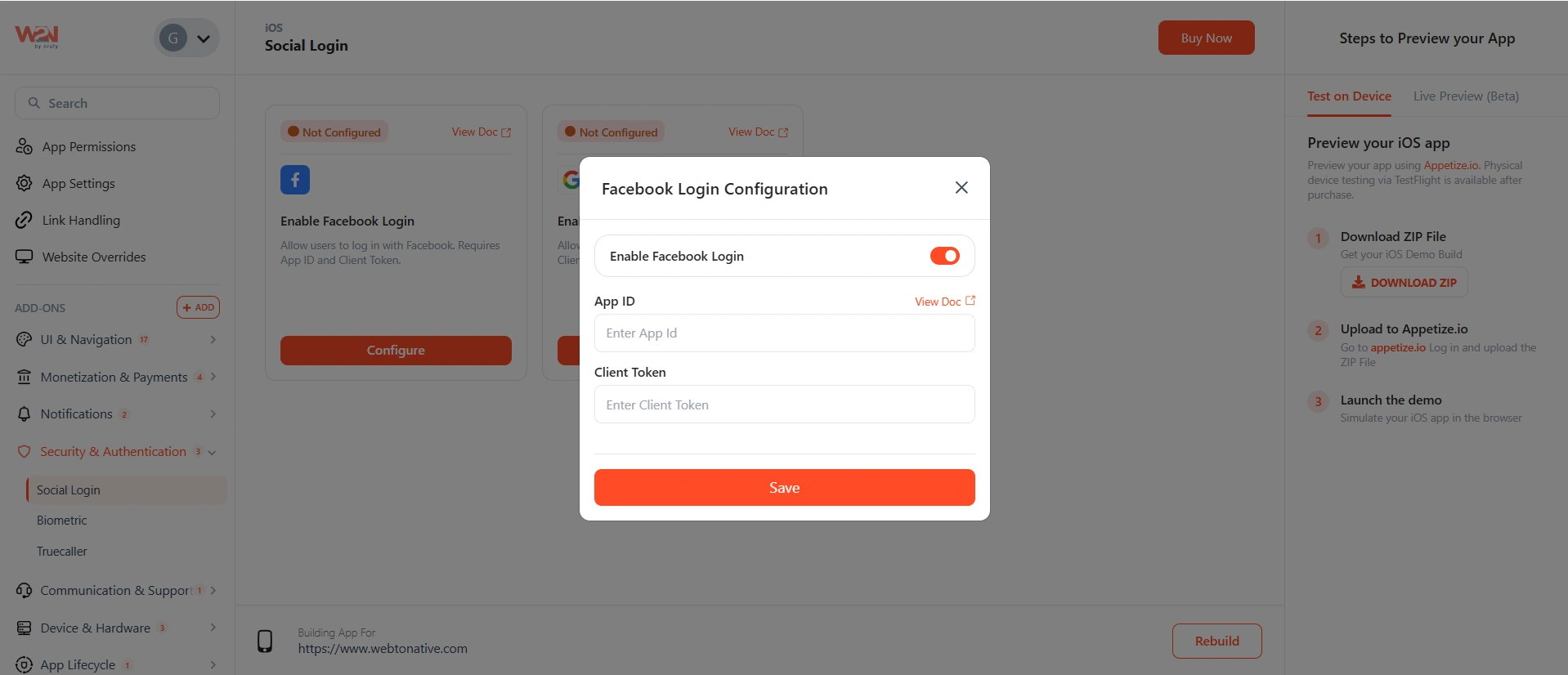
Click Configure on the Facebook Login card.
Enable Login
Enable the Facebook Login toggle.
App ID
Enter your App ID — from the Facebook Developers portal under App Settings → Basic.
Client Token
Enter your Client Token — from App Settings → Advanced.
Save & Rebuild
Save your changes and Rebuild your app to see the changes in action.
After rebuilding, test Facebook login on a real device. Make sure the redirect URL you set in the portal matches the callback page on your website.
For the complete step-by-step Facebook app setup — including App ID, Client Token, iOS Bundle ID, and Android Key Hashes — see the Facebook Login Configuration Guide. https://www.webtonative.com/support/socialloginintegrations/facebookloginconfiguration (opens in a new tab)
Steps to Set up Google Login with WebToNative
Configure Google Sign-In in Google Cloud Console to get your OAuth Client IDs, then enter them in the WebToNative dashboard
Configure
Click Configure on the Google Login card.
Enable Login
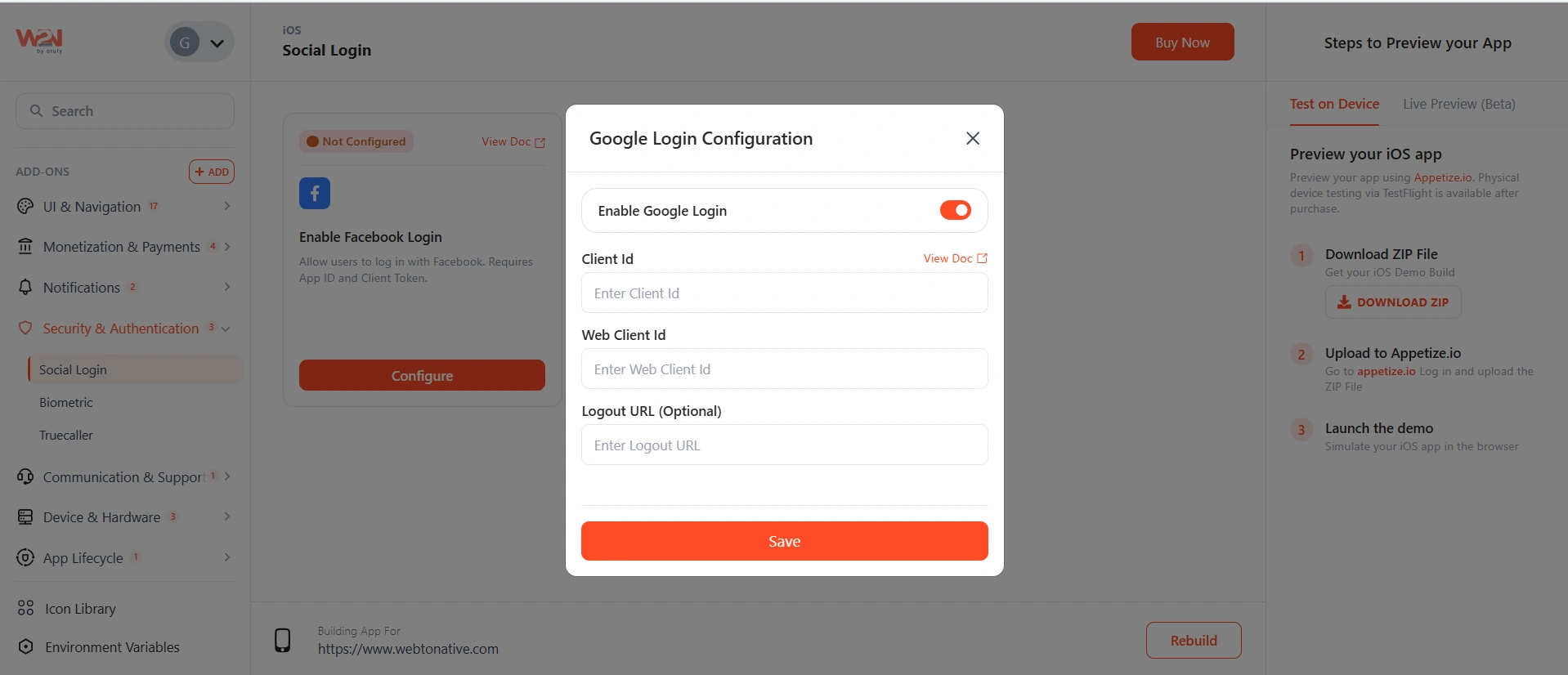
Enable the Google Login toggle.
Login Flow
Select whether you already have a login flow on your website — Yes or No. This determines how the login callback is handled.
Yes — login flow exists
Choose how your website handles the Google callback:
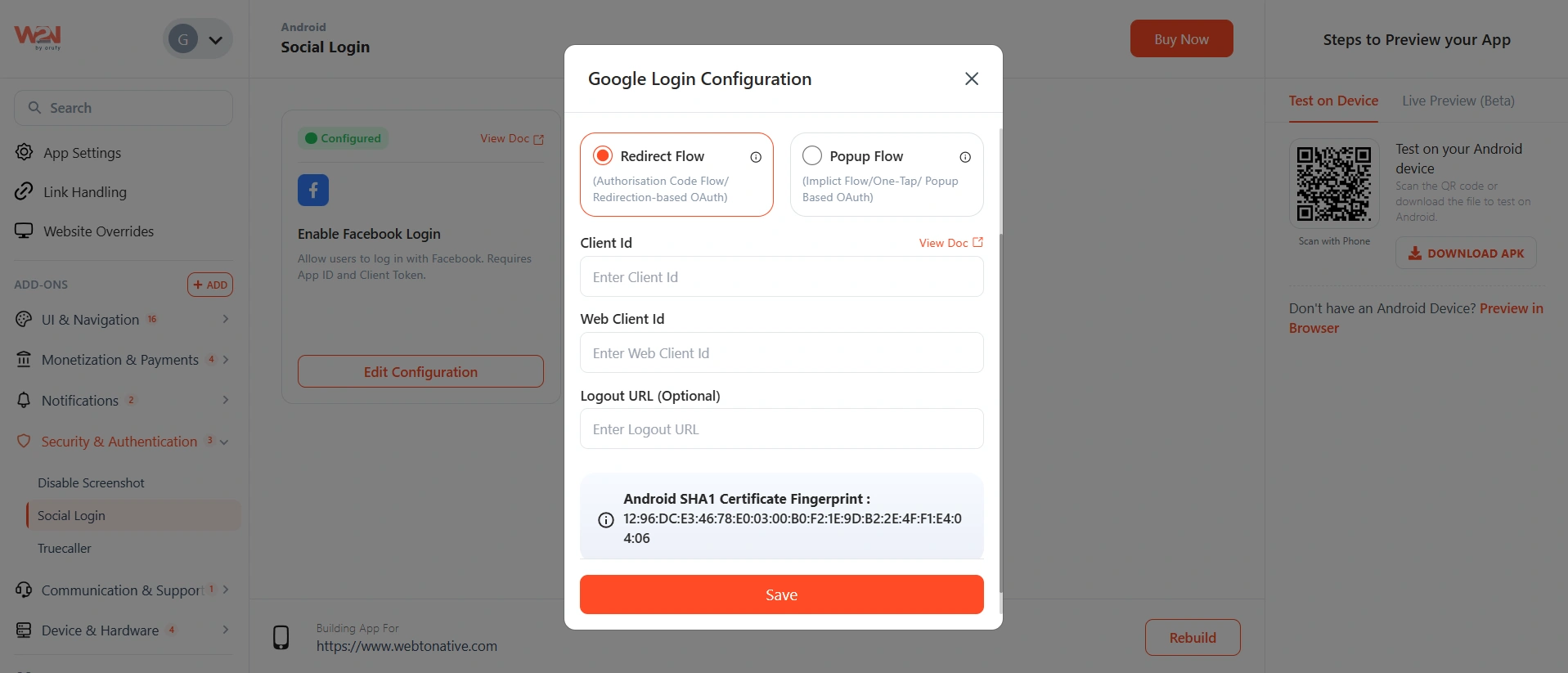
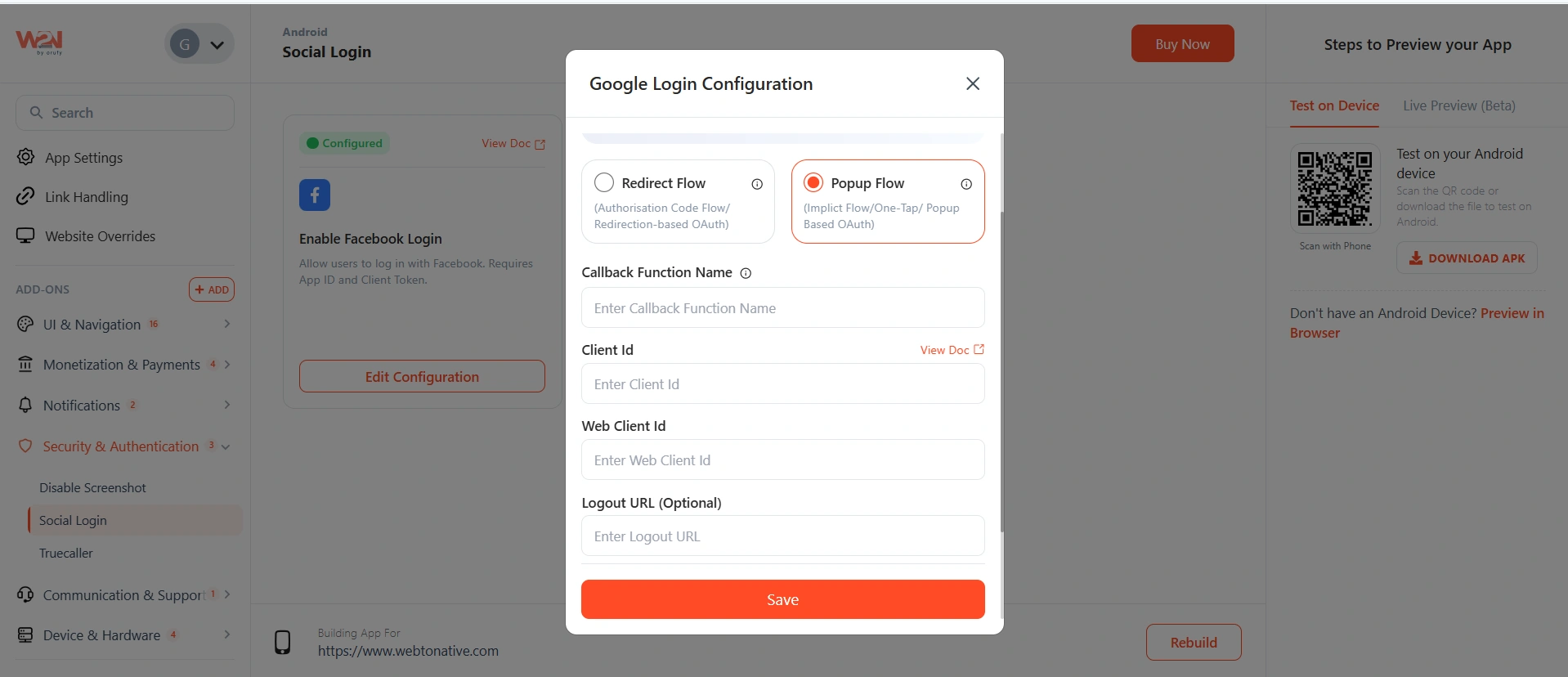

Redirect Flow
Your website redirects the user on login success or failure. Use this if your website uses Firebase sign-in with redirect, or specifically supports a redirect URI.

Popup Flow
Your website opens a popup for Google login. Enter a Callback Function Name — WebToNative injects the Google JWT token directly into this function on your website. Decode the JWT and create your session from it.
No — no login flow yet
Select No and use the WebToNative JavaScript function to trigger the Google login. The SDK handles the full flow and returns the user data via callback.
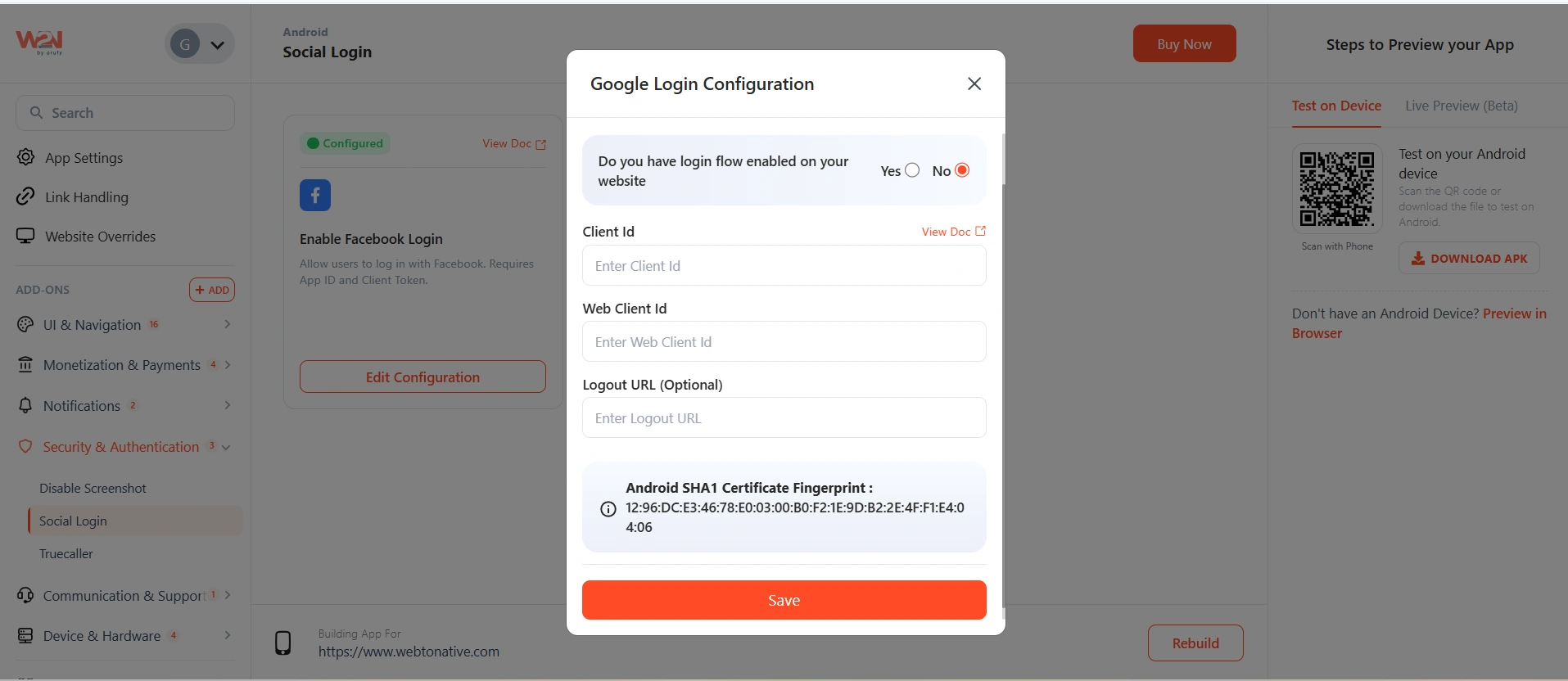
Client ID
Enter your Client ID — the OAuth client identifier for your app from Google Cloud Console.
Web Client ID
Enter your Web Client ID — the web application client ID, also from Google Cloud Console.
Logout URL
Enter the Logout URL (optional) — the page to redirect users to after they sign out.
Save & Rebuild
Save your changes and Rebuild your app to see the changes in action.
For the complete step-by-step Google Login setup — see the Google Login Configuration Guide. https://www.webtonative.com/support/socialloginintegrations/creategoogleoauthclientid (opens in a new tab)
Frequently Asked Questions
Do I need all three providers?
No — enable only what your app needs. However, Apple Sign-In is required by Apple for any iOS app that offers Google or Facebook login. If your iOS app includes either, you must also add Apple Sign-In or Apple may reject your app during review.
What is the difference between Client ID and Web Client ID for Google?
Both come from Google Cloud Console → API & Services → Credentials, and both must belong to the same project. The Client ID is for your mobile app (Android or iOS application type). The Web Client ID is for the web application type. Google Login requires both.
When should I use Redirect Flow vs Popup Flow for Google?
Use Redirect Flow when your website specifically supports redirect URIs for login callbacks — for example, if you're using Firebase Authentication with signInWithRedirect(). Use Popup Flow if your website opens a popup for login or doesn't handle redirects. If you've added a SHA key from Google Play Console, verify your Google login using the Play Console SHA key — not the one from WebToNative.
Does social login replace my existing login system?
No — it's an additional option. Users who already have accounts in your system can continue using their credentials. Social login provides a faster alternative for new users or users who prefer it.